
Wilkes Projected Versus Actual Release
A projected date estimates when custody may end under the record that controls today. An actual release date records what occurred after staff completed all checks. The two can differ. A court can amend credit, another agency can lodge a detainer, the Parole Board can change its action, or corrections staff can update sentence computation.
Pretrial detention is different from a fixed prison term. A person at Wilkes County Jail may leave after bond is posted, a judge signs an order, a warrant is recalled, a hold is removed, or another agency takes custody. Until one of those events occurs, there may be no set release date. Ask the jail what type of hold exists and ask the proper court about the order behind it.
A sentenced Georgia prisoner follows a state process. The Maximum Release Date marks when the judge's sentence will be fully served under GDC computation. A Tentative Parole Month is a Board review target, not a final release date. Keeping those labels separate prevents false expectations.
The county release timestamp answers a narrower question: when did Wilkes County stop holding the person? It may precede state intake, an out-of-county pickup, or a federal handoff. Ask for both the release type and receiving agency. If the record says transfer, follow the person into the next custody system instead of treating the timestamp as the end of confinement.
Find Wilkes County Release Dates
Start with custody type, not the charge name. The same Wilkes case can move from county jail to GDC, and the agency that computes the date changes with that move. A county release record can show when Wilkes custody ended, even when a state or federal hold continued.
- Ask whether the person is at Wilkes County Jail, in GDC custody, or held by another agency.
- For county custody, call 706-678-2224 and ask about bond, court orders, sentence credit, holds, or transfer plans.
- Check the sentencing or bond record through the Wilkes court that handled the case.
- For state custody, open GDC offender search and match the person by name, ID, case, or available description fields.
- Read the status, location, offense, and release-related fields together.
- Use the Parole Board TPM tool only for parole timing, then confirm final action.
The GDC Find an Offender search is the official state-prison route. It is not a Wilkes County jail roster. If the person has only a county booking and no state correctional record, the sheriff and court remain the right sources. The Wilkes County released inmate search explains other custody paths when the location is uncertain.
Search with as much confirmed information as possible. A common name can produce more than one state record. Compare the GDC ID, offense, case details, and location before reading a date as belonging to the right person. If there is no match, check spelling and ask the court whether the sentence was local, state, probated, or never entered as a prison term.
A Wilkes court order can explain facts that do not appear in a short public status line. Bond terms, sentence credit, probation, revocation, dismissal, and warrant recall all affect the local path. The jail records the operational release. The court supplies the legal basis. For a written answer, request both records and reconcile their dates.
Wilkes Release Date Vocabulary
Georgia's state-prison terms do not map neatly onto a county jail hold. That is the key Wilkes County computation quirk. MRD, TPM, PIC, and parole consideration apply to state sentence administration. Bond, warrant recall, court order, sentence credit, and hold removal often control the local jail date.
- MRD
- Maximum Release Date, when the imposed sentence is fully served under GDC computation.
- TPM
- Tentative Parole Month, a possible parole-review month that is not a final decision.
- PIC
- Performance Incentive Credit, a GDC program that may reduce an eligible prisoner's TPM or MRD.
- Detainer
- A hold from another agency that may lead to transfer instead of community release.
The GDC terminology page documents maximum-release language used in the state system.
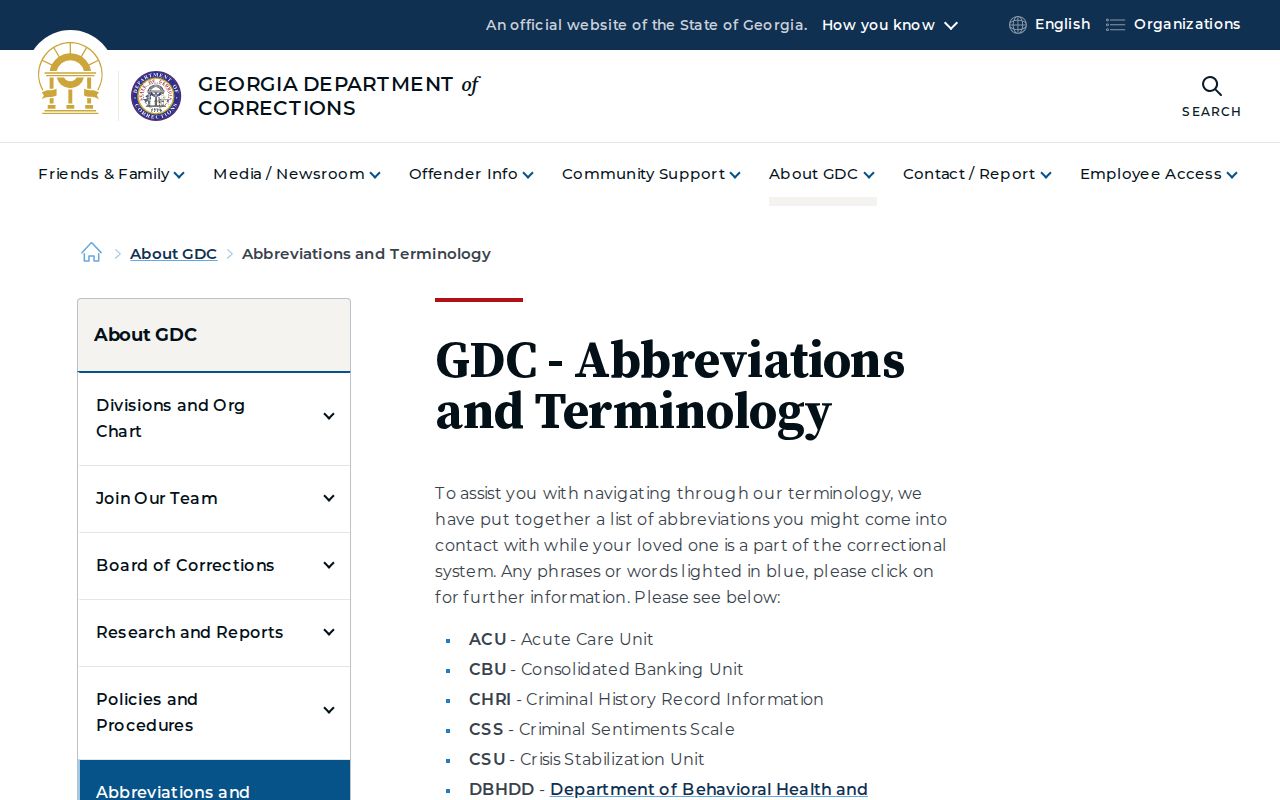
The state vocabulary helps interpret a GDC record, but it should not be applied to a Wilkes County Jail hold unless GDC controls the sentence.
Parole consideration is another distinct stage. The Board may review an eligible person before MRD, yet review does not ensure release. A TPM can be conditioned on conduct and completion of required programs. Even after favorable action, release processing and active detainers can affect where the person goes. Read Board status with the GDC record rather than substituting one for the other.
Georgia Credits Affect Wilkes Dates
Georgia's Performance Incentive Credit program applies to eligible GDC offenders. GDC says an eligible person can earn up to 12 PIC points and may receive one to twelve months off a TPM or MRD. Points come from progress in a case plan, educational or vocational improvement, and work or detail assignments. PIC is not a general Wilkes County Jail credit rule.
O.C.G.A. Section 42-5-101 authorizes GDC work incentive credits for covered felony prison terms other than life. It ties the credit system to institutional attainments, work performance, and satisfactory conduct. Eligibility and the current calculation must be confirmed through state records.
The GDC PIC program page documents the specific point and month framework.
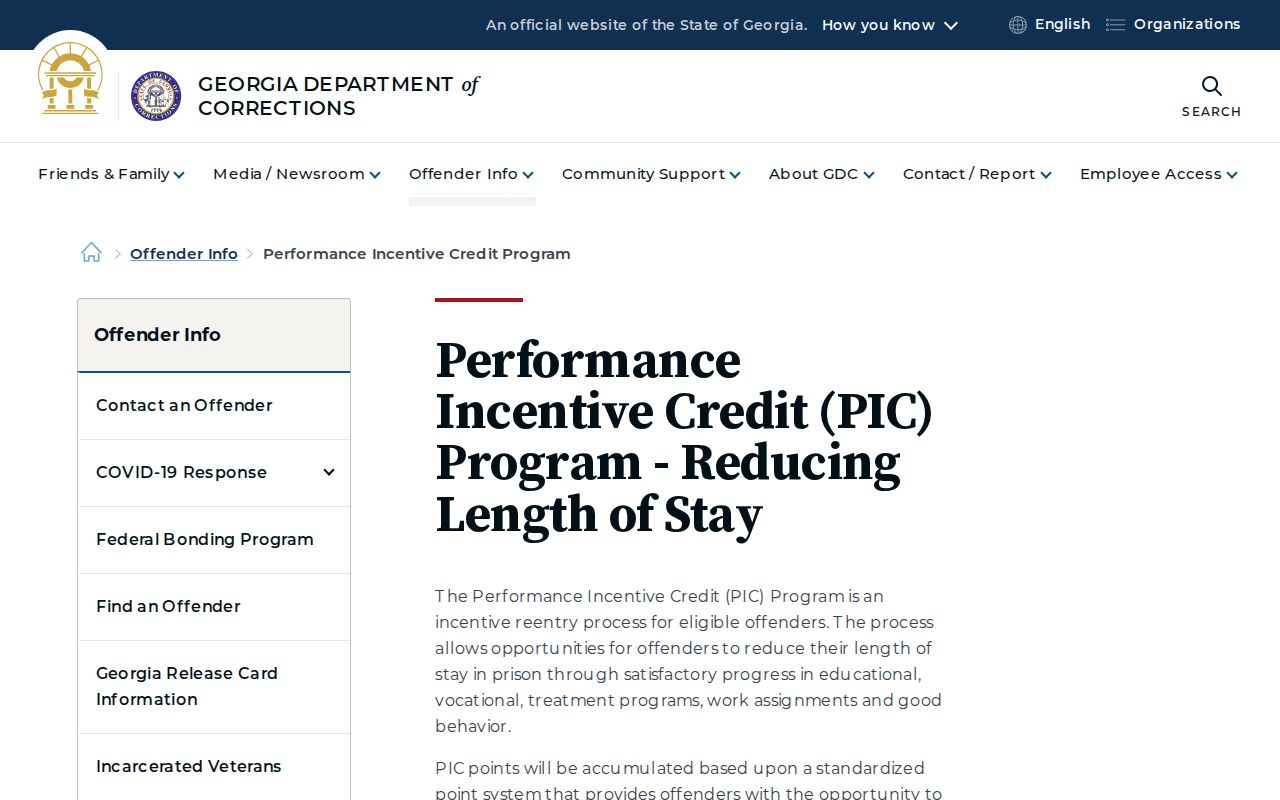
This source supports a state-prison estimate. A local Wilkes release still turns on the jail and court record.
Credits can also change as the state updates conduct, program, and work information. A public date viewed last month may not match the newest computation. Ask GDC for the current basis when a PIC adjustment appears to have moved the date. County staff cannot calculate a state PIC award merely because the original case began in Wilkes County.
Wilkes Release Sentence Limits
Georgia is not governed by one simple rule that every person serves 85 percent. The offense, sentence, offense date, parole eligibility, and statutory exclusions control the answer. O.C.G.A. Section 17-10-6.1 restricts parole and sentence-reducing measures for covered serious violent felony sentences. Life sentences also have their own date-and-offense-specific parole rules.
A public calculator cannot safely resolve those facts from a charge label alone. Read the sentencing order, verify how GDC structured concurrent or consecutive terms, and check Board eligibility. For a life or death sentence, Georgia's sentence-computation rule states that no Maximum Release Date exists. That means MRD is not the correct field.
The successful manifest capture of the serious-violent-felony statute follows its source link.
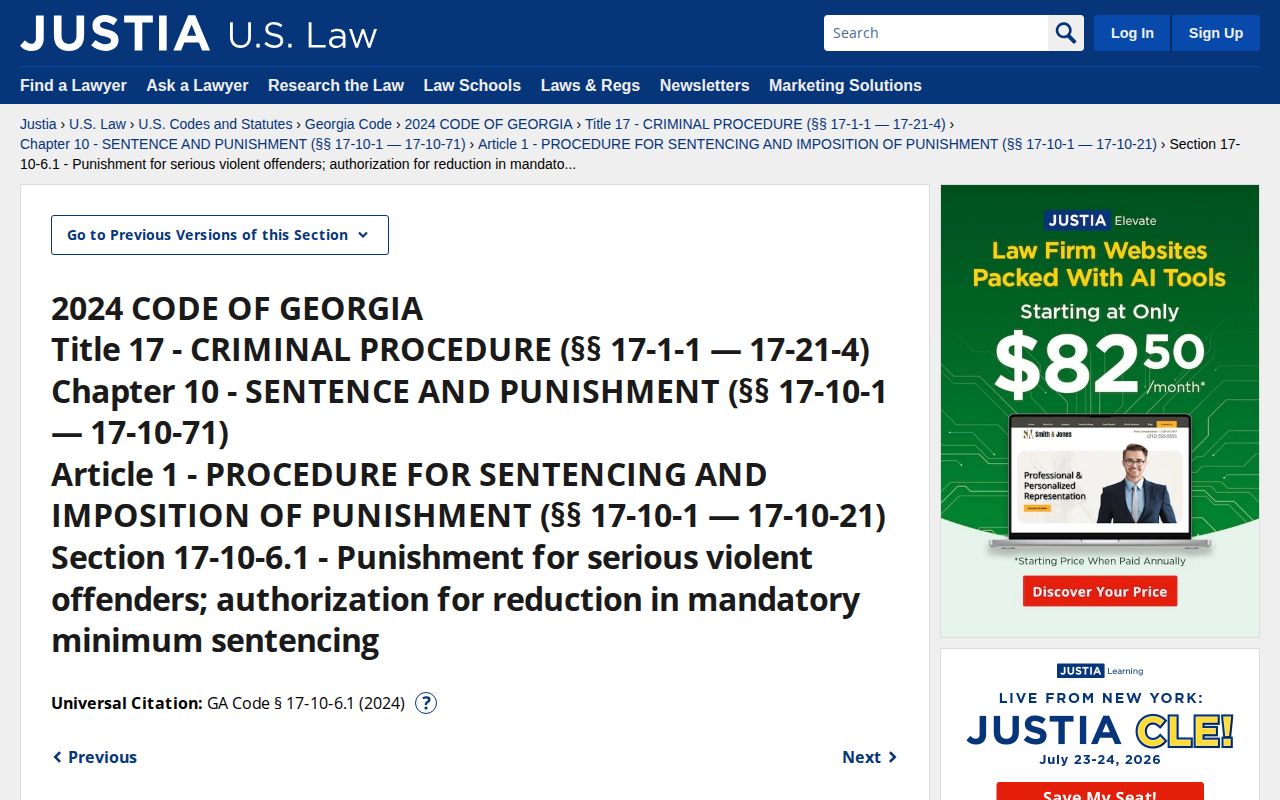
The statute shows why a Wilkes County release date must be tied to the exact sentence rather than a broad percentage claim.
Offense dates matter because Georgia parole rules have changed over time, especially for life and serious violent felony sentences. The sentence type and the law applied by the court must be read together. Do not infer eligibility from the present statute alone. The sentencing order, GDC computation, and Board record provide the linked trail needed for a sound answer.
Why Wilkes Release Dates Change
A projected date reflects facts entered at one point. Later legal or custody events can move it. Some changes shorten the term. Others delay community release or replace it with a transfer. Ask which agency made the change and request the record behind it.
| Factor | Possible effect | Confirm with |
|---|---|---|
| Court order or credit | Amends the sentence or time served. | Court and GDC |
| PIC update | May reduce TPM or MRD. | GDC |
| Parole action | May grant, deny, defer, rescind, or condition release. | Parole Board |
| Detainer or hold | May cause an agency handoff. | Holding and receiving agencies |
| Violation or new case | Can interrupt the expected path. | Court, DCS, Board, or jail |
| Data lag | May leave an old date visible. | Agency sentence records |
A TPM deserves special care. The Georgia Inmate TPM Lookup explanation says the month is not a final parole decision. Final review may depend on conduct, programs, and other conditions. A person can have a TPM without a confirmed release day.
A detainer creates a different kind of uncertainty. The scheduled prison release can occur, yet the person may be delivered to another jurisdiction rather than leave custody. Ask whether the date is a discharge to the community or a conditional transfer. The sending agency should identify the receiving authority when that information is releasable, and the receiving system becomes the next place to verify status.
Confirm Wilkes County Release Dates
Use the office that controls the date. Wilkes County Jail can address local bond, hold, court-order, sentence-expiration, and transfer questions. The court controls bond, sentence, and probation orders. GDC computes state prison terms and MRD. The Parole Board controls TPM and parole decisions. DCS supervises parolees and adult felony probationers after release but does not create the county jail release record.
Before calling, gather the full name, date of birth, GDC ID if known, court case number, and current facility. Ask whether the date is projected, maximum, tentative, or completed. Then ask about unresolved holds and whether the event will be community release or an agency transfer. Those questions prevent many errors.
If the question concerns felony probation, use the court order and Georgia Department of Community Supervision path. Probation is imposed by a court and usually takes place in the community. Parole is a Board decision after prison. Neither term alone proves the date a person physically left Wilkes County Jail, so retain the sheriff release record as the local custody evidence.
Register through the VINE Inmate Check when a custody-change alert would help. VINE can provide notice, but the completed release date must still be checked against the jail or GDC record. If public entries conflict, contact the agency that entered the newest information and the court that issued the sentence.
Note: A projected Wilkes County release date remains tentative until processing ends and every active hold is cleared or transferred.
Record the date on which each source was checked. Sentence computation, parole review, and public-data updates do not always post at the same time. A dated note makes it easier to explain why an older screenshot or saved result differs from the current GDC or Board entry.